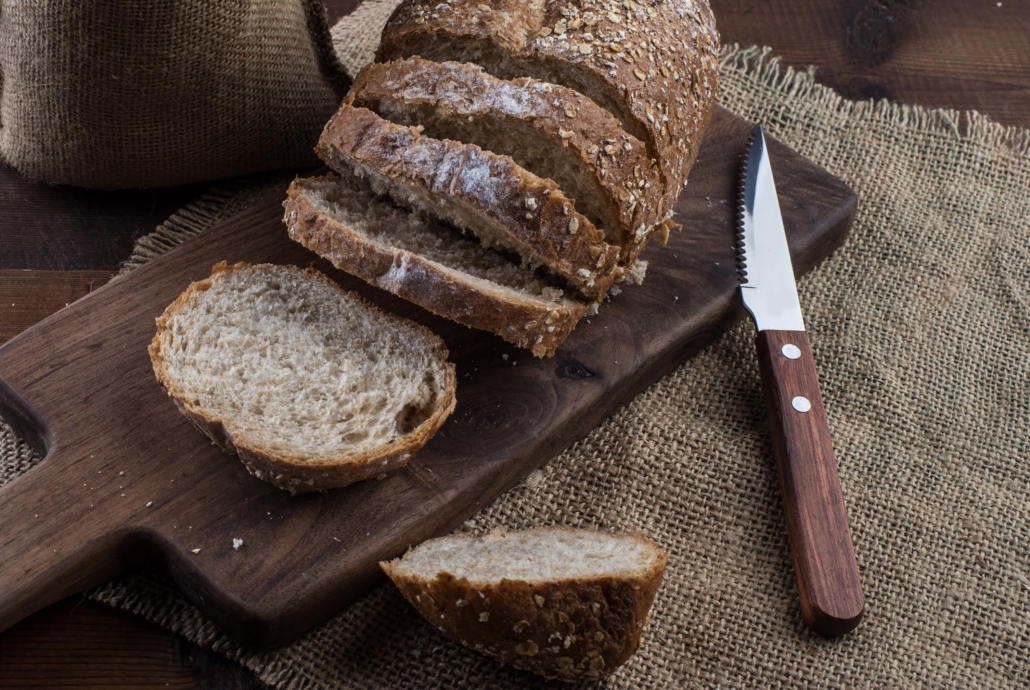
New Name of Luxury in New York: $60 RYE Bread
New Name of Luxury in New York: $60 Bread
60 dollar breadOpened in the SoHo district of Manhattan, New York, RYE by Martin Auer sat on the agenda of social media and the world of gastronomy. The bakery, the first branch in the Auer family of Austrian-rooted bakers in the United States, offers 100% organic rye bread, weighing about 1.5 kilograms, for sale at $60. Notable for its price 60 dollar breadNot only does it raise the luxury consumption debate, but it also raises the global flour market and the transformation in the foreign trade of high-added value-added food products.

RYE Rye Bread (Photo: RYE by Martin Wuer)
The family has been baking for over 50 years in Graz, Austria, preparing this product by moving 57 years of special sourdough culture to New York. Produced with imported organic flour, water, salt, and a long fermentation period of up to 24 hours, the $60 bread can retain its freshness for up to 10 days when preserved at room temperature. The sale of the same bread at their bakery in Austria at a price of about 14 euros ($16) is on the radar of news channels and economic commentators in the United States. Oven management; He explains the high rent costs in SoHo, the importation of raw materials directly from Austria, and manual labor as justification for the price.
Why Is 60 Dollar Bread on the agenda?
On social media and digital platforms, this price tag literally started a discussion of "inflation and luxury perception". In videos that are viral on TikTok and Instagram, content producers go in front of the oven and perform tasting tests. X (Twitter) users approach the situation humorously and reactively, sharing "A Nut Bread = A Weekly Kitchen Shopping" or "Living in New York is out of control now." In fact, supermarket chain Lidl said on the front of the oven, "$60 for bread? You can get 122 croissants from us for that money," the mobile advertising tools wrote, turning the situation into a commercial marketing move.
Despite all this controversy, queues are not missing at the gate of RYE by Martin Auer. For those who don't want to give $60 to a whole loaf, a quarter of slices ($15) or over are offered with individual slices ($6-$14) decorated with special ingredients. In fact, some financial and technology offices in the region are quoted as organizing "Bread Party" events, where employees jointly buy bread by dividing the budget.
Turkey and World Foreign Trade Statistics in the Flour Products Sector
In the global food trade, the grain and flour products sector is strategically important in a wide range of ways, from food security to gourmet consumption trends. In the International Trade Classification (GTIP – Customs Tariff Statistics Position) system, flour products are basically monitored under the 1905 GTIP Code.
1905 GTIP Code Opening: "Bread, cake, cake, biscuit and other breadmaking products; doughless bread, empty capsules, seal roses, rice paper and so on."
World General Foreign Trade Dynamics
The global 1905 GTIP floured goods export market has a volume of over $40 billion annually. Its leadership in world exports attracts countries that produce high value-added processed food such as Germany, Canada, Italy, Belgium and Poland. On the import side, the United States is the largest buyer of the world market. The fact that the United States imports billions of dollars of flour products each year is one of the main economic factors that encourages Austrian brands such as Martin Auer to enter the New York market directly.
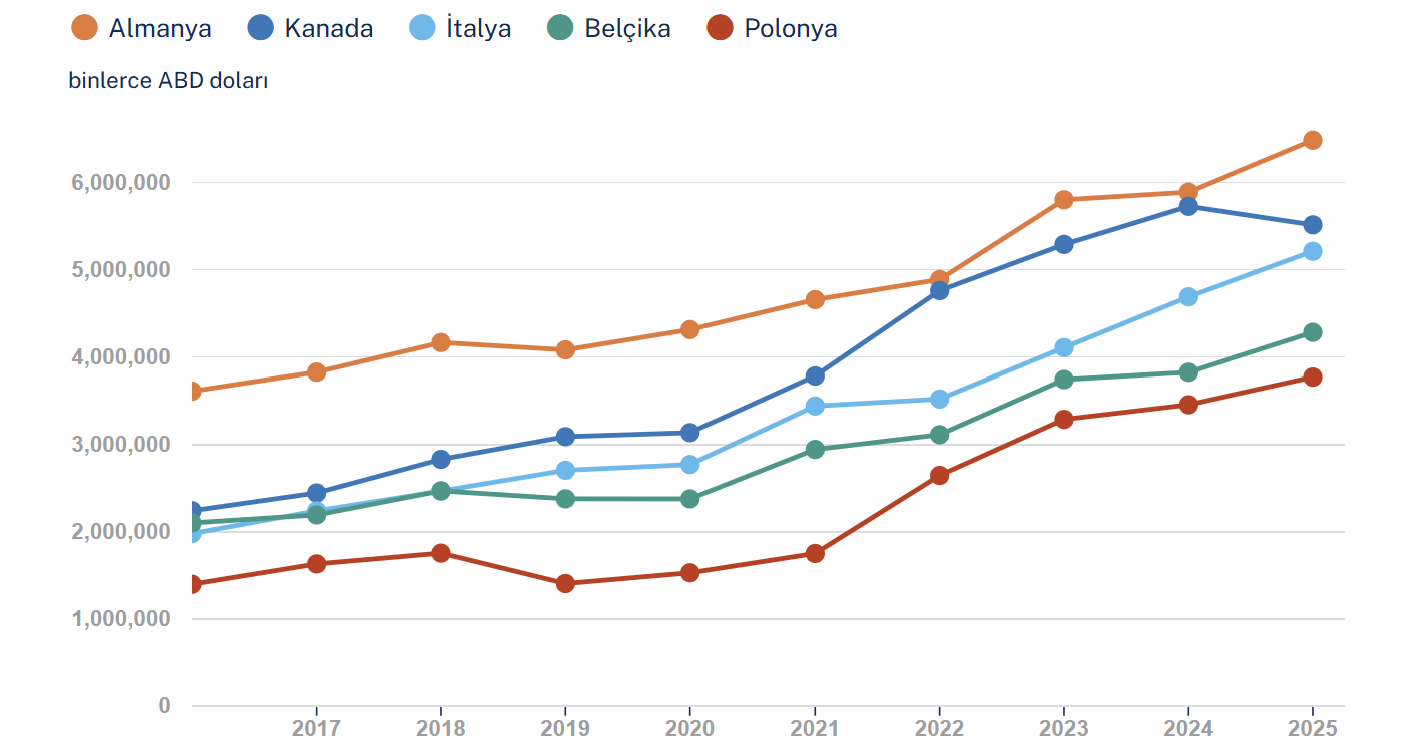
1905 GTIP Unlu Mamuller World Export Chart
Turkey's 1905 GTIP Performance
Turkey is a regional power in the export of flour products thanks to its strong flour industry and advanced food processing infrastructure. Turkey's exports under the 1905 GTIP have exceeded the annual level of $1.5 billion.
- Basic Export Pens: 1905.31 (Sweet biscuits) and 1905.90 (Other breads, cakes, pastries).
- Main Export Markets: Iraq, the United Kingdom, the United States, the Middle East countries, and the European Union markets.
- 1905.90 Import/Export Balance: Turkey is a net exporter in this chapter. Imports are often limited to specialty dietetic products and qualified gourmet products.
Despite global food inflation and increasing logistics costs, demand for niches and high value-added flour products continues to grow in both Turkey's export portfolio and global markets.
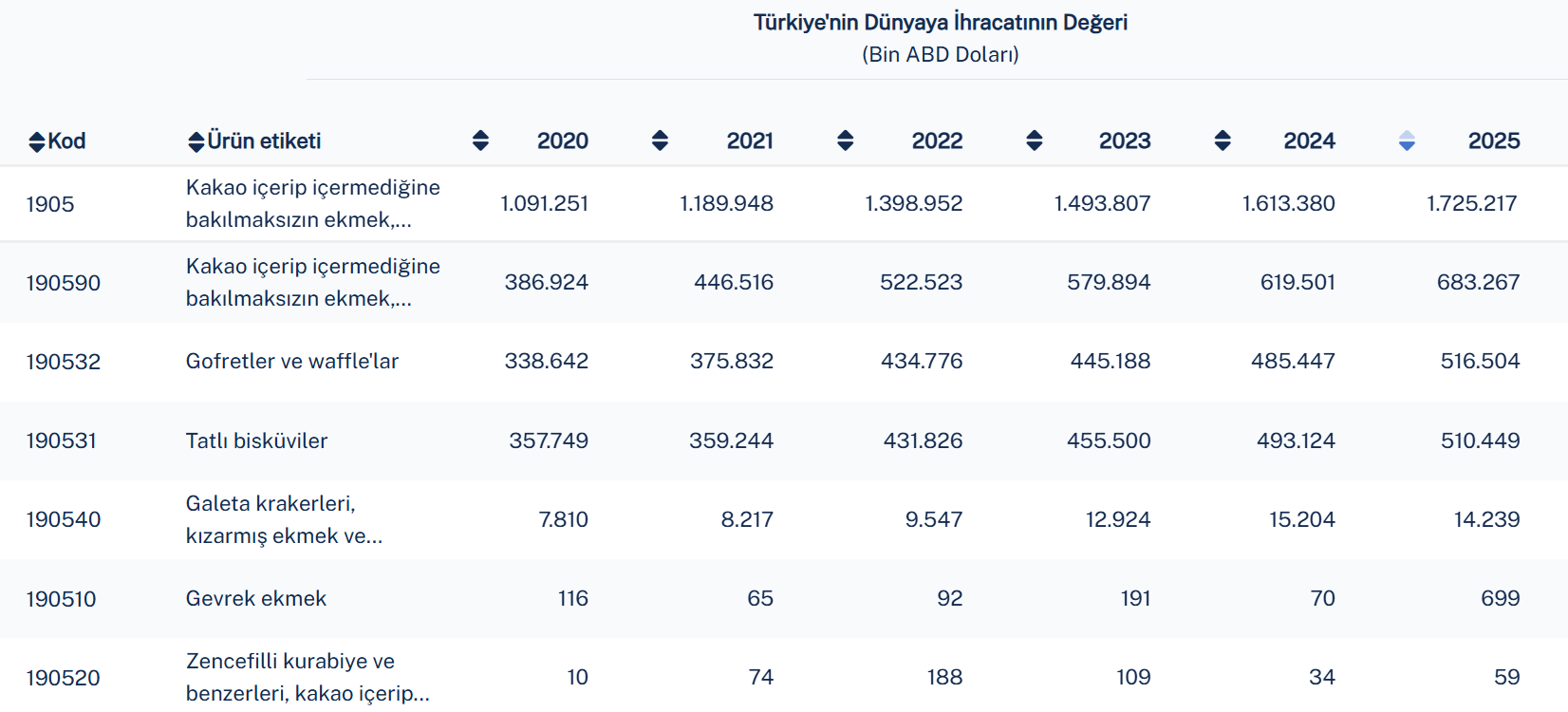
Turkey's 1905 GTIP Number Sub-Product Categories Export Chart
References
1. News and Social Media References (RYE by Martin Auer – New York)
- DW Euromaxx (Facebook Video Report): Is a loaf of artistic bread the new designer handbag? A $60 loaf from Austrian bakery Auer in New York City's SoHo neighborhood has gone viral
- Social Commentary / YouTube Analysis: New York Is Charging $60 For Bread Europeans Buy For $3
2. References to Foreign Trade and Statistics (1905 GTIP Flour Products)
- TheGlobby: TheGlobby Digital Foreign Trade Platform (International Trade Statistics, GTIP-Based Market Analysis and Global B2B Match Data)
- T.C. Ministry of Trade & Exports General Directorate: T.C. Ministry of Commerce Information Some and Foreign Trade Portal (1905 GTIP Code Statements and Turkish Foreign Trade Legislation Data)
- ITC Trade Map (International Trade Centre): Trade Map – International Trade Statistics (HS Code 1905 – Bread, pastry, cakes, biscuits and other bakers' global Import and Export Volumes)
- TÜİK (Statistics Agency of Turkey): TÜIK Foreign Trade Statistics Database (1905 GTIP "Bread, Cake, Biscuit and Other Bakery Products" Annual Export/Import Data)