
Financial Statement Analysis Course
Course Objectives
The purpose of financial table analysis training; basic of participants Accounting Starting from the process, the balance sheet and income table are mainly to develop the competences to read, analyze and interpret financial statements correctly.
Financial analysis methods such as vertical and horizontal analysis, ratio analysis are applied as part of the financial table analysis training; the effects of enterprises on the operating cycle, financing resources and financial structure are evaluated from a holistic perspective.
In addition, it is aimed that participants can make healthier and strategic decisions through financial data by understanding the balance sheet make-up, fix-activation preferences, and the issues that should be considered in the communication processes with financing organizations.

Participants who completed this training;
- Financial tables (bilanço and income table) gain the competence to read and interpret correctly.
- With the basic accounting process, it evaluates the concepts of income, expense, and accrual from a financial analysis perspective.
- It can use vertical analysis, horizontal analysis, and ratio analysis methods in practice.
- It can analyze the operating cycle of businesses and the impact of that cycle on financial statements.
- Recognizes the basic funding resources and financing tools used in businesses.
- In negotiations with financial institutions, it communicates more consciously and effectively through financial statements.
- Understands the effects of optimisation and activation preferences on financial outcomes.
- Develops the ability to detect balance sheet makeup and evaluate financial data from a critical perspective.
- It can make more accurate, sustainable and strategic decisions through financial data.
Education Detail
- Basic Accounting Process
- Accounting Process and Its Importance to Business
- Income and Expense Concepts
- The Concept of Achakkuk (Guidation-Activeization Process and Preferences)
- Basic Financial Statements
- Balance Sheet
- Income Table
- Analysis Methods
- Vertical and Horizontal Analysis
- Ratio Analysis
- Activity Cycle and Analysis in Business
- Basic Financing Resources in Businesses
- Basic Financing Tools
- Issues to Consider in Communication with Financing Organizations
- Activity Cycle and Analysis in Business
Evaluations on Balance Sheet Makeup
 Prof. Dr. Serhat Yanık
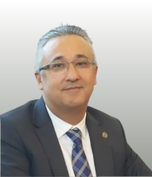 Prof. Dr. Serhat Yanık
Scientific Advisory Board Member
Serhat Yanık graduated in Public Administration from Istanbul University’s Faculty of Political Sciences in 1991. He went on to earn a master’s degree in Business Administration at the same university in 1994 and completed his doctorate in 2000.
Yanık began his career at the Ministry of Finance in 1991. In 1992, he joined Istanbul University’s Faculty of Political Sciences as a research assistant and became an assistant professor in the same faculty in 2001.
After serving as an associate professor from 2008 to 2016, Yanık became a professor at Istanbul University in 2016. He is Director of the university’s Crowdfunding Application and Research Centre and a board member of the Expert Accountants’ Association of Turkey. He teaches accounting, finance, auditing and insurance at universities and other institutions. His articles have been published nationally and internationally, and he has contributed to numerous research projects and academic events.
Yanık served as an independent board member of Garanti Faktoring A.Ş. from 2012 to 2019 and joined the board of Güneş Sigorta A.Ş. as an independent member in 2019.
Appointed an independent board member of ICBC Turkey Bank A.Ş. on 24 February 2020, Yanık holds a Certified Public Accountant licence (SMMM) and an independent auditor qualification issued by Turkey’s Public Oversight, Accounting and Auditing Standards Authority.
Please contact for detailed information.
Gökhan EROL
e: gerol@inovakademi.com
g: +90 (533) 761 19 34
t: +90 (216) 709 73 32

